Open Knowledge and Critical Infrastructure: a Nordic Conversation - Open Knowledge Blog
- Advocacy
- Posted by by Renata Ávila
Open Knowledge and Critical Infrastructure: a Nordic Conversation
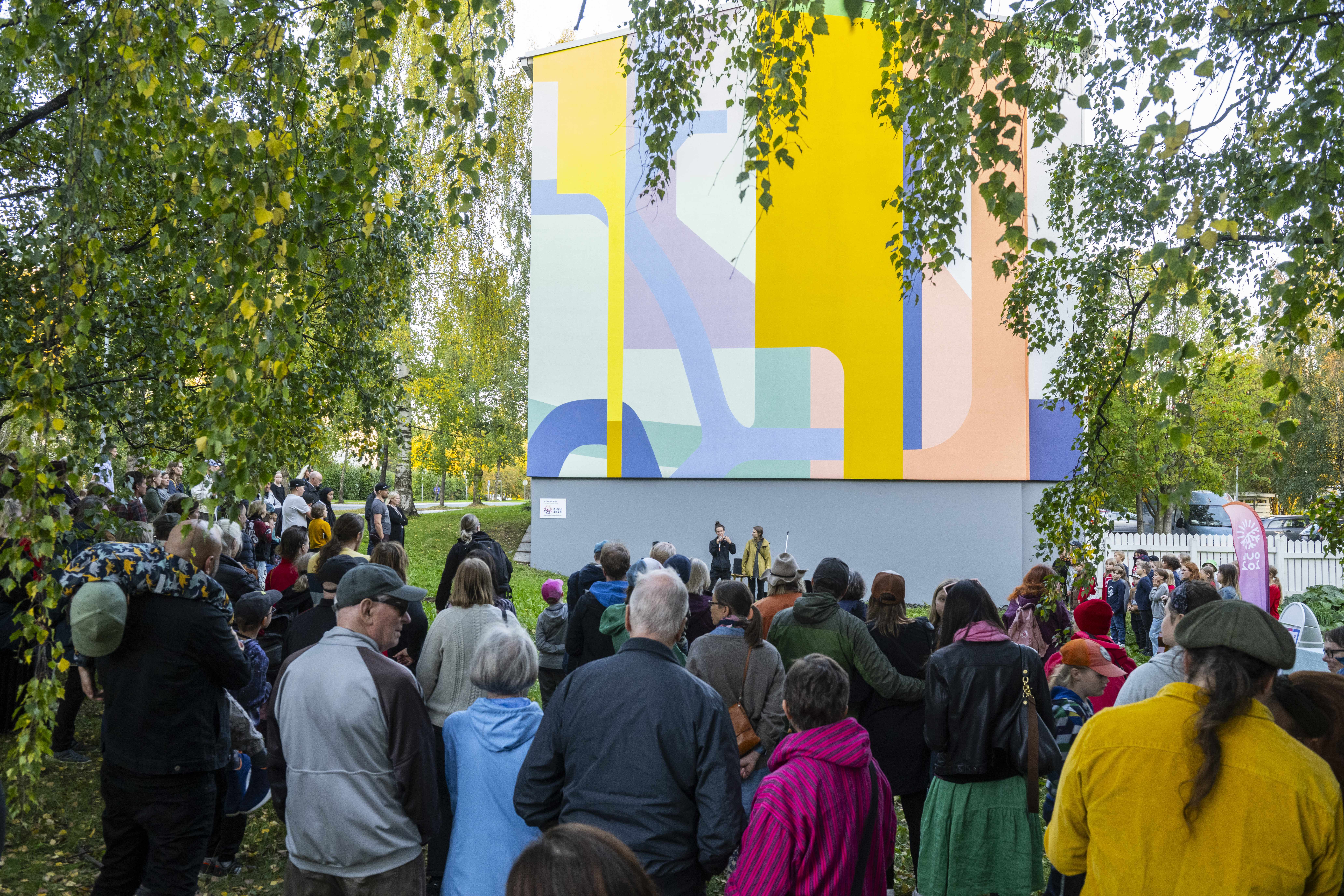
Last week in Oulu and remotely, the Nordic Open Movement and their friends, comprised by archivists, researchers, Wikimedians, open data advocates, Open Knowledge Network members, journalists, cultural practitioners, and digital rights experts, gathered around a question:
What cohesive, cross-sectoral policy, legal, and funding frameworks must national and international bodies adopt to formally recognize, protect, and ensure the long-term resilience and independent governance of open knowledge systems?
What would change if societies recognized and protected knowledge systems as critical infrastructure?
The discussion was part of a new initiative led by the Open Knowledge Foundation in collaboration with the Wikimedia Policy team and other partners across the open knowledge movement. Our shared concern is that while governments are investing heavily in digital sovereignty and digital public infrastructure, they continue to overlook knowledge infrastructure. Our objective is to make a strong case for sustained support.
We discussed with our Nordic members and friends how, across Europe and beyond, policymakers are rethinking the foundations of the digital state and the infrastructure that powers it. Significant public resources are being directed toward digital identities, payment systems, cloud services, data exchanges and cybersecurity. While these systems are rightly recognized as strategic public infrastructure, a country could hardly function without knowledge. The infrastructures that sustain collective knowledge, such as archives, libraries, research networks, educational resources, public-interest information systems, institutional memory, and collaborative platforms such as Wikipedia, all remain largely absent from these strategic discussions, and in some jurisdictions, are even attacked.
This omission is becoming increasingly difficult to justify. At a moment when artificial intelligence systems are extracting enormous value from public knowledge, many of the institutions that create, curate, and preserve that knowledge are struggling to survive. In many public institutions, archives remain undigitized, research outputs remain disconnected from public decision-making, local knowledge disappears when organizations close, and civic knowledge initiatives face chronic underfunding. Even in Nordic countries.
The result is a profound paradox: governments are investing in technological sovereignty while allowing knowledge sovereignty to erode or remain duplicated, disconnected or outdated.
The argument emerging from the consultation is not that the infrastructures supporting the digital exchange of knowledge should one day become critical infrastructure. It is that knowledge systems already function as critical infrastructure and must be protected, supported, and funded accordingly. Just as societies invest in roads, energy grids, telecommunications networks, and water systems because they are essential to collective life, they must also invest in the infrastructures that preserve, steward, and circulate knowledge.
Participants in Oulu argued that knowledge systems should no longer be viewed as cultural accessories or optional public goods. They are essential infrastructures that enable societies to function. Climate adaptation, public health, democratic accountability, scientific progress, crisis preparedness, and effective governance all depend on resilient knowledge systems and it is necessary to study our institutional mandates and legislations to find novel ways to apply old rules to foster their protection.
The conversation also challenged a common misconception: that knowledge is simply data. Knowledge includes scientific research, certainly, but also institutional memory, local expertise, oral histories, cultural practices, community archives, educational materials, and the accumulated experience that helps societies understand themselves and navigate uncertainty. Preserving these resources is not enough. They must remain accessible, interoperable, trustworthy, and useful.
This becomes particularly urgent in the age of AI. Several participants expressed concern that public institutions are increasingly becoming dependent on commercial systems trained on public knowledge but disconnected from the communities and institutions that produced it
The discussion repeatedly returned to the growing asymmetry between extraction and investment. Open knowledge has become a critical raw material for some of the most valuable companies in the world, yet the archives, repositories, educational institutions, and collaborative platforms that generate that knowledge remain vulnerable.
Participants argued that this imbalance cannot continue indefinitely if societies want robust and independent knowledge ecosystems. The consultation also surfaced important tensions:
- If knowledge becomes recognized as strategic infrastructure, how do we balance openness with security?
- How do we protect sensitive information without undermining transparency?
- How do we preserve pluralism and historical complexity in increasingly polarized political environments?
Participants shared examples ranging from debates about public archives and government secrecy to the preservation of cultural artifacts during periods of occupation and conflict.
These stories highlighted an important lesson: We need to focus both on technical and social resilience.
Knowledge survives because communities, institutions, and governance systems actively preserve and transmit it across generations. Technology can support that work, but it cannot replace it.
Another recurring theme was interoperability. Across the world, governments, universities, civil society organizations, and cultural institutions hold vast amounts of valuable knowledge. Yet much of it remains fragmented, locked in disconnected systems, or invisible to those who need it most. Researchers produce critical findings that never reach policymakers. Archives contain valuable historical records that remain inaccessible. Public institutions struggle to connect expertise across sectors.
The technological capacity to address these challenges increasingly exists but it needs renewed trust and support in ecosystems like the open movement which has been at the forefront of these battles for a long time.
There was a general consensus on the relevance to advance this topic on the continent now. Across Europe and within the United Nations system, significant momentum is building around Digital Public Infrastructure, Digital Public Goods, Digital Commons, digital sovereignty, and the implementation of the Global Digital Compact.
We must ensure that open knowledge systems have a place at the table where these decisions are being made. That means moving beyond advocacy alone. It requires evidence, examples, policy proposals, and practical pathways forward. We need to demonstrate how archives, research networks, public-interest information systems, educational resources, community knowledge initiatives, and platforms such as Wikipedia contribute directly to the public infrastructure of modern societies.
We need to identify existing legal frameworks, governance models, and funding mechanisms that can be adapted and strengthened. And we need to show that investment in knowledge infrastructure creates public value that extends far beyond the cultural sector.
The path forward
The consultations now underway are intended to gather experiences from different regions, documenting successful practices, identifying legal and policy precedents, and mapping existing governance frameworks.
We aim to build a positive agenda for recognizing and supporting open knowledge systems as critical infrastructure within the current digital infrastructure initiatives. Our goal is to ensure that knowledge is embedded within the major discussions already shaping our digital future.
We will continue online regional assemblies to discuss the topic. You can join us or add your ideas to the conversation here.
Note: We want to thank Susanna Anas and team for their invaluable contribution in setting up and co-hosting the meeting.
- digital commons
- Finland
- open culture
- open knowledge
- Open North
- Oulu Löyly
- policy
- x
- [whatsapp](whatsapp://send?text=https://blog.okfn.org/2026/06/24/open-knowledge-and-critical-infrastructure-a-nordic-conversation/)
- telegram
- [bluesky](https://bsky.app/intent/compose?text=Open%20Knowledge%20and%20Critical%20Infrastructure:%20a%20Nordic%20Conversation https://blog.okfn.org/2026/06/24/open-knowledge-and-critical-infrastructure-a-nordic-conversation/)
Related Content
- Open Technology Research
- Posted by by OKFN
Announcing the Open Technology Research (OTR) Symposium 2026 in Barcelona
Join Open Knowledge at RightsCon 2026, Zambia
- Advocacy
- Posted by by Renata Ávila & Amalia Toledo
Knowledge as Critical Digital Infrastructure: A Call to Action for a Resilient Future
Renata Ávila
CEO at Open Knowledge Foundation. Renata Avila is an international human rights and technology lawyer and openness advocate. She is helping individuals and organisations access and use data to take action on the most pressing social problems, as well as preserving and enhancing human rights through open standards, policy and advocacy. In her previous practice, focused in strategic litigation for access to information and access to justice, she represented high profile human rights advocates, including Nobel Peace Prize Rigoberta Menchu Tum. A former fellow and affiliate of the Stanford Institute of Human-Centred Artificial Intelligence, she is currently associated with the Center for Internet and Society at CNRS, France. She participates on the boards of several organisations, including Open Future, the Center for the Advancement of Infrastructural Imagination and the Just Net Coalition. She co-founded the Alliance for Inclusive Algorithms and the Progressive International. She has co-authored two books and contributed chapters to several others, and regularly contributes to different publications in English and Spanish.