Linux Foundation Newsletter: April 2026
The Linux Foundation | 15 April 2026
This month marks a watershed moment for the future of open source security with the launch of Project Glasswing , a landmark initiative designed to shield critical infrastructure at scale. We are also seeing the rapid maturation of the "Internet of Agents" following a packed-house MCP Dev Summit in New York, while the launch of the x402 Foundation establishes a new neutral home for universal payments. From the shift toward the PARK Stack and the iconic glider on stage at KubeCon Europe to the continued expansion of our silicon, energy, and cinematic foundations, open governance remains the definitive operating model for global innovation.
Here are this month's highlights
- Project Glasswing: A $100M Defensive Shield for Open Source | In a major alliance with the Linux Foundation and leaders like AWS, Google, and Microsoft, Anthropic launched Project Glasswing. This initiative leverages the Claude Mythos frontier model to identify and automate the fixing of high-severity vulnerabilities across critical infrastructure. By addressing the "maintainer gap," Glasswing provides defenders with a durable, AI-driven advantage in cybersecurity. Watch the launch video and read Jim Zemlin’s post on why this matters >>
- MCP Dev Summit North America Debuts to 1,200+ Registrants | The Agentic AI Foundation (AAIF) officially kicked off its 2026 event slate with the inaugural MCP Dev Summit in New York City. With a standing-room-only crowd, the event solidified the Model Context Protocol as the industry standard for agentic interoperability and served as the launchpad for a global series of 2026 summits across Europe and Asia. Explore the event recap >>
- Linux Foundation Launches x402 Foundation for Universal Payments | With the contribution of the x402 protocol from Coinbase, the x402 Foundation has launched as the neutral home for a universal payments standard. Founding members including Stripe, Cloudflare, and Amazon Web Services are collaborating to build an interoperable future where AI agents and APIs can transact as seamlessly as they exchange data. Read the announcement >>
- KubeCon Europe: Kubernetes Becomes the Platform for AI | Last month in Amsterdam, the cloud-native community demonstrated that Kubernetes is the definitive platform for the AI era. Amidst a record-breaking turnout and a full-sized glider on the keynote stage symbolizing the project's "lift" into AI infrastructure, the CNCF celebrated the industry-wide consolidation around the PARK Stack (PyTorch, AI, Ray, Kubernetes). Check out the glider talk >>
>> Read on for even more news, research, and opportunities from across the Linux Foundation.
Contents
Edu cation Opportunities
Build a Smarter, More Sustainable Future
Sustainable careers are built on continuous learning. Celebrate Earth Day and take advantage of 35% off sitewide and develop the skills that power innovation and long-term impact. Offer ends April 21.
LF Event Spotlight
- Open Source Summit + Embedded Linux Conference North America goes LIVE May 18-20 in Minneapolis! Don’t miss the premier event for open source developers, technologists, and community leaders to collaborate, share information, solve problems, and gain knowledge - furthering open source innovation and ensuring a sustainable ecosystem for all.
View the schedule >> + register today >>
LF Europe: Community Updates
- Join the Open Source Policy & Ecosystem Forum, 8 June 2026 in Brussels | A one-day event bringing together policymakers, industry, and open source communities to discuss Europe’s digital sovereignty, innovation, and competitiveness.
Call for Proposals closes on 17 April 2026 (11:59 PM CEST), don’t miss your chance to contribute.
We are looking for sessions on:
- Building a sovereign stack with open source
- Real-world impact of EU regulations (CRA, AI Act, NIS2)
- Strengthening Europe’s open source industry
- Increasing European leadership in global OSS communities
- Submit your talk proposal and help shape the future of open source in Europe.
- The following day, on 9 June, OpenSSF will host its European Open Source Security Forum at the same venue in Brussels.
- Open Sovereign Cloud Day Recap
This event brought together cloud native practitioners, maintainers, and public and private sector stakeholders to explore how open source technologies enable digital sovereignty across Europe and beyond with strong participation and engagement throughout the day.
- The event focused on how cloud native, standards-based approaches support sovereignty by avoiding lock-in while enabling regulatory compliance, data residency, and operational resilience. Through real-world case studies and discussions, attendees examined how open source ecosystems are used to design and operate sovereign cloud platforms across public sector and regulated industries.
- The key sessions covered topics such as the EU Cloud Sovereignty Framework, portability as a sovereignty requirement, lessons learned from deploying sovereign cloud stacks, bridging ecosystems like Kubernetes and OpenInfra, and achieving data sovereignty in practice. The program also featured lightning talks on practical sovereignty approaches and a closing panel on reclaiming digital sovereignty for citizens and institutions. If you would like to revisit the content, you can check out the session slides >>
- Does FOSS Buy Sovereignty? Participation vs. Ownership
At FOSS Backstage 2026, Mirko Boehm addressed whether adopting open source software truly delivers digital sovereignty. The session highlighted a key distinction: sovereignty comes not from using FOSS alone, but from active participation in its development and governance. Rather than license freedoms, it is technical capacity, institutional knowledge, and community influence that enable independence. A central insight was that participation, not ownership, determines whether nations can avoid proprietary lock-in and shape their technological future. Watch the session >>
LF Research: Survey + report
Help us understand the commercial open source ecosystem!
Do you have experience commercializing open source? This survey investigates how COSS companies successfully capture economic value at scale. We are seeking insights from founders and enterprise leaders to characterize their COSS company and project, strategic approach, and challenges specific to building a successful company around an open source project.
New research: Recommendations from the AI Executive Forum
In late February, the Linux Foundation convened a group of key stakeholders to discuss the main priorities and challenges brought on by the growing use of generative AI and agents. The discussion centered on four main topics: trust and identity, security and privacy, agentic AI in regulated industries, and open source in agentic AI. Existential questions emerged alongside technical ones, and the group adjourned with some recommendations for the community to move forward sustainably and ethically.
Linux Foundation Projects: Featured news
Academy Software Foundation (ASWF)
- OpenPGL becomes an Academy Software Project! Initially developed by Intel, OpenPGL allows artists and developers to use more realistic lighting when building and designing their scenes and animations, while still offering artistic freedom at the same or better rendering performance. OpenPGL has already been adopted and integrated into leading renderers, including Blender’s Cycles, Chaos’ V-Ray, SideFX’s Karma, Disney Animation’s Hyperion, and others, and has been used on films including Zootopia 2 and The Super Mario Galaxy Movie.
- Recordings from the 2026 Open Source Forum are now available on the ASWF YouTube channel >>
- Carol Payne, the ASWF TAC Chair, was recently featured in a Corridor Crew video on the evolution of CorridorKey, their recently released open source, AI-powered green screen tool.
- Upcoming Events:
- Summer Learning Program | The ASWF Summer Learning Program is a fully online program that provides practical skills and mentorship to members of underrepresented communities who are looking to explore technical careers in animation and visual effects. This year’s program runs from June 1- July 31, 2026 with a focus on those that identify as an underrepresented racial or ethnic minority. The deadline to apply as a mentee or as a volunteer is April 18. Learn more >>
- NAB Show | The ASWF has partnered with SMPTE to host an open source panel discussion on April 18 exploring how open-source initiatives power modern production and post-production pipelines.
- Dev Days | Coming up May 14! Our 24-hour virtual hackathon is designed to encourage individuals of all levels, ranging from first time contributors to seasoned veterans, to interact with the community and make their first (or twenty-first!) contribution to a project. Maintainers and regular contributors for each project will be available to support and mentor all contributors throughout the process and will have a curated list of suggested day-sized tasks to choose from.
- Open Source Days 2026| Save the date for Open Source Days, which will be in Los Angeles on July 19-20! The call for presentations will be opening later this month.
Agentic AI Foundation (AAIF)
- Jim Zemlin, Executive Director of the Linux Foundation & Mazin Gilbert, MBA, Ph.D., new Executive Director of the Agentic AI Foundation joined John Furrier at theCUBE 's New York Stock Exchange Studios to discuss the launch of AAIF and the maturation of agentic infrastructure. They address how open source collaboration and the Model Context Protocol establish the essential security and auditability required for mission-critical enterprise systems.
- The Agentic AI Foundation just dropped its 2026 global events lineup! We're bringing together the builders of agentic AI to turn ideas into production ready systems. We’ll have flagship events in Europe and North America for AGNTCon + MCPCon, plus a global series of MCP Dev Summits focused on hands-on work with MCP, Goose, and AGENTS.md.
- Angie Jones has joined the Agentic AI Foundation as Vice President of Developer Experience. She’ll focus on making agentic AI practical for developers by advancing open standards, reference implementations, and interoperable workflows. Her work ensures agents can move seamlessly across tools and environments, helping developers spend less time wiring systems and more time building real-world solutions. With Angie on board, AAIF continues to strengthen the foundation for the “Internet of Agents,” where collaboration, consistency, and reliability drive the next phase of agentic AI.
- Mazin Gilbert has joined as the AAIF’s Executive Director, bringing deep experience leading AI innovation and large scale deployment across industry. His appointment comes at a critical moment, as agentic AI moves from experimentation into production systems and toward what he describes as the “Internet of Agents”, an ecosystem where autonomous systems collaborate across tools, organizations, and industries.
- Coding agents serve as the essential foundation for every agentic system currently being built. Technical reasoning and the ability to execute code are the core drivers of agent capability across all knowledge work. Read more about how AAIF continues to support the development of open standards to ensure these systems remain secure and interoperable as the ecosystem scales.
- The 2026 roadmap for the Model Context Protocol has been published, identifying four priority areas: transport evolution, agent communication lifecycles, governance maturation, and enterprise readiness. This shift toward working-group-driven priorities reflects the growing organizational maturity of MCP.
Automotive Grade Linux (AGL)
- AGL All Member Meeting (AMM) Japan: Register to join us in Tokyo on May 13-14, 2026. Our bi-annual meeting brings together the AGL community to learn about the latest developments, share best practices and collaborate around open source technologies for the automotive industry. Registration is complimentary for members. The schedule is now live and features talks including:
- How SDV Reference PF Accelerates the Future of Mobility Through Open-Source Collaboration - Yuichi Kusakabe, Honda Motor Co., Ltd.
- How to Balance Safety and Hardware Decoupling in SoDeV - Naoto Yamaguchi, AISIN CORPORATION
- Uniting the Supply Chain: Shaping the Automotive SBOM Together - Masato Endo & Keisuke Takase, Toyota Motor Corporation & Ayumi Watanabe, Hitachi Solutions, Ltd.
- Upgraded Unified HMI: Simplifying Window System Dependencies - Kenta Murakami, Panasonic Automotive Systems Company
- AGL All Member Meeting (AMM) Europe: Save the date for our fall event, which will be in Berlin on September 30 - October 1, 2026. Additional details to come.
Alliance for OpenUSD (AOUSD)
- From 3D Gaussian Splats to WebAssembly support, the recently launched OpenUSD v26.03 expands what’s possible across real-time 3D, web, and large-scale pipelines.
This includes:
Faster performance
- Browser-based USD workflows
- More flexible data editing
- Learn more in this blog or check out the full release notes on GitHub.
- To address the evolving needs of the 3D ecosystem, AOUSD launched the Characters, Motion, and Interactivity (CMI) Interest Group. This newest group is dedicated to extending OpenUSD’s capabilities beyond static environments, focusing on the standardization of skeletal animation, blend shapes, and interactive behaviors.
- Additionally, AOUSD welcomes seven new member organizations including Aras, Booz Allen Hamilton, C-Infinity, Mobiltech, Qualcomm Technologies, Inc., SGDL Innovation, and XGRIDS. Learn more about these updates and member milestones, in this press release >>
- At NVIDIA GTC, Aaron Luk (AOUSD’s Chairperson of the Core Specification Working Group) presented on how OpenUSD streamlines development pipelines, enhances data compatibility across 3D tools, and establishes standardized processes for complex physical AI workflows. Watch the session on demand and explore all sessions on how industrial AI, robotics, automotive, and digital twins are transforming physical AI.
- OpenUSD is a driving force behind the scalability of physical AI. Last month at GTC, NVIDIA showcased a turning point in physical AI: Robots, vehicles and factories are scaling from single use cases and isolated deployments to sophisticated enterprise workloads across industries.Read the full blog >>
CAMARA
- Cloud Native Telco Day, March 22, Amsterdam (co-located with KubeCon + CloudNativeCon EU | CAMARA presented a session, “From Footprint to Value: Commercial Adoption of CAMARA APIs” featuring Andreas Boruga (Aduna Global), Nathan Rader (Deutsche Telekom & Chair of CAMARA’s governing body) and Huub Applelboom (KPN) discussing “good” looks like for multi-operator availability, basic expectations on conformance and SLAs, and how those signals unlock real adoption, specifically for the cloud. Stay tuned for links to the session video!
- BCN LATAM Summit | Markus Kummerle participated in BCN LATAM, a key regional event bringing together industry leaders, innovators, and policymakers in the telecom and digital ecosystem. At the event, Markus explored the current state and challenges of the NetworkAPI ecosystem with Rafael A. Junquera and Ludmila Lizún, shared insights on the CAMARA Project, and presented updates on the GSMA Open Gateway initiative. Watch the recording >>
- Catch CAMARA at these upcoming events:
- Automotive Edge Computing Consortium (Gothenburg) - 21-22 April
- Network X Americas ( Dallas) - 18-20 May
- DSP Leaders World Forum (London) - 19-20 May
- DTW Ignite (Copenhagen) - 23-25 June
- CAMARA in the news:
- Diginomica sat down with TSC chair Herbert Damker, and co-chair Tanja De Groot to discuss the community’s recent white paper that outlines how CAMARA is leveraging MCP agents in network APIs.
Read the full article >> CAMARA's open approach makes telecom network capabilities accessible to AI agentsCAMARA charts path for network-aware AI applications with MCP
- Fierce Network also covered the white paper in its recent post, CAMARA charts path for network-aware AI applications with MCP.
CHIPS Alliance
- CHIPS Alliance will participate in the 2026 OCP EMEA Summit from April 29 to 30 in Barcelona, Spain, at Booth B54. Representatives from Google and Antmicro will demonstrate open source silicon development and discuss progress on the OpenPRoT firmware stack and Caliptra roadmap.Read more >>
- SV Tools Project launched to facilitate open source tooling for SystemVerilog and UVM codebases, including the sv-tests suite and Verible toolkit. Supported by members like Antmicro and Google to provide a coherent development and verification experience.Read more >>
- Proud sponsor of FOSSi Foundation’s Latch-Up 2026, May 1-3 in Waterloo, Ontario. Our sponsorship aims to strengthen collaboration between the organizations and provide a space for sharing progress reports on open source hardware initiatives. Read more >>
- CHIPS Alliance is adopting a community-driven leadership model for 2026, overseen by Governing Board Chair Matt Cockrell and TAC Chair Aaron Cunningham. We’re focusing on sustainability and technical rigor for high-quality IP and design enablement tools.Read more >>
Cloud Native Computing Foundation (CNCF)
- Advancing Open Source AI, NVIDIA Donates Dynamic Resource Allocation Driver for GPUs to Kubernetes Community | In addition, NVIDIA announced at KubeCon Europe a confidential containers solution for GPU-accelerated workloads, updates to the NVIDIA KAI Scheduler and new open source projects to enable large-scale AI workloads.
- F5 Elevates to Gold Membership in the Cloud Native Computing Foundation| The Cloud Native Computing Foundation® (CNCF®), which builds sustainable ecosystems for cloud native software, today announced that F5 has upgraded its membership to Gold, reinforcing its commitment to advancing open source cloud native technologies.
- CNCF Backstage Documentary Highlights Project Evolution from Development to Global Open Source Standard for Platform Engineering | The Cloud Native Computing Foundation® (CNCF®), which builds sustainable ecosystems for cloud native software, today released the documentary “Backstage: From Spreadsheet to Standard,” available to screen now.
- CNCF Celebrates Innovators Advancing Cloud Native at KubeCon + CloudNativeCon Europe | The Cloud Native Computing Foundation® (CNCF®), which builds sustainable ecosystems for cloud native software, today announced the winners of the CNCF Community Awards at KubeCon + CloudNativeCon Europe.
- Istio Brings Future Ready Service Mesh to the AI Era with New Ambient Multicluster, Gateway API Inference Extension and More | The Cloud Native Computing Foundation® (CNCF®), which builds sustainable ecosystems for cloud native software, today announced that Istio has launched a host of new features designed to meet the rising needs of modern, AI-driven infrastructure while reducing operational complexity. Updates include the beta release of ambient multicluster support, a beta release of Gateway API Inference Extension and experimental support for agentgateway as a component of the Istio data plane.
- CNCF Welcomes 21 New Silver Members As Global Demand Surges for Observability, AI, and Secure Cloud Native Infrastructure | The Cloud Native Computing Foundation® (CNCF®), which builds sustainable ecosystems for cloud native software, today announced the addition of 21 new Silver Members, Silver End Users, and Non-Profit members, reinforcing the continued momentum of cloud native adoption across industries and further strengthening and expanding the foundation’s global community.
- CNCF Nearly Doubles Certified Kubernetes AI Platforms | The Cloud Native Computing Foundation® (CNCF®), which builds sustainable ecosystems for cloud native software, today announced the latest update to the Kubernetes AI Conformance Program, which has nearly doubled the number of certified platforms since it was announced in November, including OVHcloud, SpectroCloud, JD Cloud and China Unicom Cloud. The latest release introduces stricter v1.35 requirements, officially codified as Kubernetes AI Requirements (KARs), designed to ensure consistent, industrial-scale artificial intelligence (AI) deployment. These KARs focus on seamless hardware orchestration and validation for agentic workflows, effectively eliminating infrastructure fragmentation.
- CNCF and SlashData Report Finds Cloud Native Community Reaches Nearly 20 Million Developers | The Cloud Native Computing Foundation® (CNCF®), which builds sustainable ecosystems for cloud native software, today released new insights from its latest State of Cloud Native Development report in collaboration with SlashData. Based on data from more than 12,500 developers across 100 countries, the research focuses on the continued expansion of the cloud native ecosystem and the growing role of platform engineering and artificial intelligence (AI) workloads in shaping the future of software development.
- Cloud Native Computing Foundation Announces Kyverno’s Graduation | The Cloud Native Computing Foundation® (CNCF®), which builds sustainable ecosystems for cloud native software, today announced the graduation of Kyverno, a Kubernetes-native policy engine that enables organizations to define, manage and enforce policy-as-code across cloud native environments.
- CNCF and SlashData Report Finds Platform Engineering Tools Maturing as Organizations Prepare for AI-Driven Infrastructure | The Cloud Native Computing Foundation® (CNCF®), which builds sustainable ecosystems for cloud native software, released new findings from the Q1 2026 CNCF Technology Radar report with SlashData, uncovering how developers are evaluating platform engineering technologies for workflow automation, application delivery, security and compliance management.
- General Availability of Dapr Agents Delivers Production Reliability for Enterprise AI | The Cloud Native Computing Foundation® (CNCF®), which builds sustainable open source ecosystems for cloud native software, today announced the general availability of Dapr Agents v1.0, a Python framework built on Dapr’s distributed application runtime to help teams run reliable, secure AI agents in production environments.
- CNCF Unveils KubeCon + CloudNativeCon India 2026 Schedule | The Cloud Native Computing Foundation® (CNCF®), which builds sustainable ecosystems for cloud native software, today announced the conference sessions for KubeCon + CloudNativeCon India 2026. The event, scheduled for 18-19 June, 2026, in Mumbai, will bring together adopters and technologists from leading open source and cloud native communities.
- Sustaining OpenTelemetry: Moving from dependency management to stewardship | Bloomberg has been developing – in partnership with nonprofit foundations that support open source – a mentorship-based approach to open source stewardship that focuses on the key missing ingredient: creating sustained contributor capacity for maintainers and projects.
- Announcing Kubescape 4.0 Enterprise Stability Meets the AI Era | We are happy to announce the release of Kubescape 4.0, a milestone bringing enterprise-grade stability and advanced threat detection to open source Kubernetes security. This version focuses on making security more proactive and scalable. It also introduces capabilities that allow AI agents to utilize Kubescape to scan clusters as well as enable security posture scanning for the AI agents themselves.
- Higress Joins CNCF: Delivering an enterprise-grade AI gateway and a seamless path from Nginx Ingress | We are thrilled to announce that Higress has officially passed the Technical Oversight Committee (TOC) vote to join the Cloud Native Computing Foundation (CNCF) as a Sandbox project, becoming a proud member of the CNCF ecosystem.
- Announcing the release of KubeVirt v1.8 | The KubeVirt Community is happy to announce the release of v1.8, which aligns with Kubernetes v1.35.
- Tekton Becomes a CNCF Incubating Project | The CNCF Technical Oversight Committee (TOC) has voted to accept Tekton as a CNCF incubating project.
- Fluid Becomes a CNCF Incubating Project | The CNCF Technical Oversight Committee (TOC) has voted to accept Fluid as a CNCF incubating project.
- Welcome llm-d to the CNCF: Evolving Kubernetes into SOTA AI infrastructure | We are thrilled to announce that llm-d has officially been accepted as a Cloud Native Computing Foundation (CNCF) Sandbox project!
- Announcing a Kotlin Multiplatform API and SDK for OpenTelemetry | We’re pleased to announce that the contribution of Embrace’s Kotlin API and SDK to OpenTelemetry has been accepted. The project expands vendor-neutral observability support across client- and server-side applications written in Kotlin. It establishes a foundation for a community-owned Kotlin SDK and allows KMP and Kotlin projects to capture telemetry using one API for many different platforms.
- Beyond Batch: Volcano Evolves into the AI-Native Unified Scheduling Platform | With the release of Volcano v1.14, Kthena v0.3.0, and the new AgentCube, Volcano is transforming from a batch computing tool into a Full-Scenario, AI-Native Unified Scheduling Platform.
- CNCF Introduces a New Recertification Program as Kubestronaut Community Surpasses 3,500 | Today at KubeCon + CloudNativeCon Europe, CNCF is introducing a new way to support that growth: CARE Program (Certification Advancement & Recertification Experience), an update to the CNCF certification program that recognizes continued learning while simplifying how professionals maintain their credentials.
- Agones Moves to the CNCF: A New Era for Open Source Multiplayer Game Infrastructure | The Agones project, the open source platform for scaling and orchestrating dedicated game servers on Kubernetes, celebrates its official transition to the Cloud Native Computing Foundation (CNCF). Originally founded as a deep co-development between Google and Ubisoft in 2017, the project is now being donated by Google to the CNCF at the Sandbox level to foster a community-owned and governed future.
- State of Cloud Native Development Q1 2026 | The latest CNCF + SlashData State of Cloud Native Development Report reveals how nearly 20 million developers are adopting, standardizing, and scaling cloud native technologies across the ecosystem.
- The CNCF Technology Radar Report: Workflow Orchestration, App Delivery and Security & Policy Management | The CNCF Technology Radar Report, featuring insights from 400+ developers, reveals which technologies are leading across workflow automation, application delivery, and security – and why developers rely on them in production.
Confidential Computing Consortium (CCC)
- A new IDC survey reveals that 75% of organizations are now adopting Confidential Computing, with 18% already in production. TEEs are becoming the industry’s "mailroom without windows" for securing Generative AI and sensitive data processing. Read this coverage by InformationWeek and learn why Confidential Computing is leading the charge toward a more secure, verifiable digital future.
- New session recordings from OC3 2026 are live. The sessions showcase production use cases, including Google Cloud Confidential Space and Bosch’s Hermetik platform, proving that secure cross-company collaboration is now a reality for automotive and finance. Mike Bursell’s session | Rachel Wan’s session
Continuous Delivery Foundation (CDF)
- cdCon 2026 Schedule Announced || Join us for a two-day CDF Intensive on AI, Security, and Platform Engineering, on May 18–20, 2026, at Open Source Summit in Minneapolis, Minnesota. View Keynotes and Speaker Lineup >>
DPDK
- DPDK at 15: From Intel's internal experiment to open source foundation | Jim St. Leger and Venky Venkatesan's original architecture delivered 10x packet throughput over the kernel stack. St. Leger traces the decisions that made it work, the governance shift that made it neutral, and what it took to convince competitors to co-govern something they all depended on.
- Fifteen years of open source governance, in the words of the person who led it | Rashid Khan chaired DPDK's Governing Board and oversaw 100% member retention. His benchmark for mature infrastructure: boring is good. He covers leading by influence when nobody reports to you, making automated vendor-neutral testing mandatory via UNH-IOL, and why 5G networks, CERN, and financial trading all run the same packet processing framework.
- Twelve years as a DPDK maintainer, one of the first from outside Intel | Thomas Monjalon joined from 6WIND in 2013 when Intel still controlled releases and roadmap. This spotlight covers how he built the contribution processes and cross-vendor trust that made genuinely neutral governance possible, and where he thinks the project goes next.
- See what the DPDK community is actually working on before Stockholm | Summit 2026 sessions cover routers built on DPDK in production, hardware offload trade-offs, formal verification applied to packet processing code, and deployment war stories with names attached. May 12 to 13, Stockholm.
- CHIME's correlator team ingests 6.4 Tb/s of UDP from FPGA front ends using DPDK | Andre Renard's team built a single-pass placement pipeline using poll-mode RX, DDIO header inspection in L3, and non-temporal scatter-writes into GPU-ready DRAM layouts. One pass, no reorder step, full engineering detail in the article.
- Your first DPDK contribution doesn't require a patch | Patch review is the fastest entry point into the contribution workflow. No commit access, no lab, no project history required. Read a patch, verify one detail, post one concrete observation.
Enabling Linux in Safety Applications (ELISA) Project
- ELISA Workshop London 2026 – CFP Closing Soon!
Join the ELISA Workshop London 2026, taking place June 9–11 at Canonical’s London office, bringing together project members, contributors, and ecosystem partners to collaborate, accelerate progress, and plan future goals.
- Call for Proposals closes April 30, 2026, submit your talk proposal soon to contribute to the workshop. Submit your talk proposals >> + Learn more about previous workshops >>
- ELISA Seminar - From Requirements to Code: Managing End-to-End Traceability with BASIL | This ELISA Seminar introduced BASIL, an open source tool for managing requirements and traceability across specifications, tests, documentation, and code. The session highlighted end-to-end traceability, collaborative workflows, and integrations with test and CI systems, alongside a live demo of BASIL in action. Learn more about BASIL and watch the session >>
- What to expect from the ELISA Project at Open Source Summit 2026 – North America | The ELISA Project will be featured at Open Source Summit North America 2026 as part of the Safety-Critical Software Track, highlighting how open source supports safety standards, regulatory compliance, and secure system design.
Sessions will cover topics such as software supply chain management, requirements traceability, safety certification, open source quality management systems, medical robotics interoperability, and modern software verification methods. Join industry experts from organizations like AMD, Garmin, Tidepool, and the U.S. Air Force as they share real-world approaches to building and verifying safety-critical systems with open source. Learn more about the sessions and register >>
FINOS
- Updated FINOS Project Lifecycle: From Collaboration to Production | The updated FINOS Project Lifecycle provides a clearer, more predictable path for projects to evolve from initial contribution to industry-wide standards. Shaped by the TOC, Governing Board, and broader community this update simplifies collaboration while maintaining the technical excellence our community expects.
- OSFF London Schedule is Live | 25 June | The Open Source in Finance Forum (OSFF) is the premier event that connects the leaders in financial services, technology, and open-source innovation. OSFF 2026 will spotlight groundbreaking advancements, deliver insights on best practices, and offer exclusive access to the leaders shaping open source in finance.
- OSFF New York Registration is Open | Nov 4 - 5 | As open source becomes integral to financial services, OSFF provides companies with a unique venue to maximize open source ROI. By strategically contributing to open projects, organizations benefit from reduced development costs, heightened security, access to top talent, and overall faster innovation.
FinOps Foundation
- FinOps X is less than 2 months away! This year, 2,500+ attendees will gather at the Marriott Marquis in San Diego for four days of sessions, chalk talks, workshops, and networking built around what’s shaping FinOps in 2026.
- The FinOps Framework has been updated to reflect the growing strategic role of FinOps in organizations working to maximize value from an expanding set of Technology Categories. The 2026 revisions introduce Executive Strategy Alignment as a new Capability, deepen the FinOps Scopes construct with richer guidance and additional Technology Category pages, explore the convergence of FinOps activities with other interconnected disciplines and update a number of Capabilities to be more inclusive of all Technology Categories.
- The 6th Annual State of FinOps survey is a snapshot from the global FinOps community. Read the executive summary on proactive technology value: AI Tops the Agenda as FinOps Shifts Up, Left, and Out Across Technology Categories.
High Performance Software Foundation (HPSF)
- HPSFCon 2026 event recap is live | This year’s program highlighted the importance of open, community-driven approaches to high performance computing and software infrastructure. Read the Read the blog >> and watch the videos on-demand >>
- HPSF is pleased to welcome HPX as a new established project. HPX brings a modern approach to parallel and distributed computing in C++, expanding the foundation’s portfolio of technologies advancing scalable, high performance systems. Read more >>
- Chapel 2.8 is here, bringing developer ergonomics and portability. Learn more >>
Jupyter
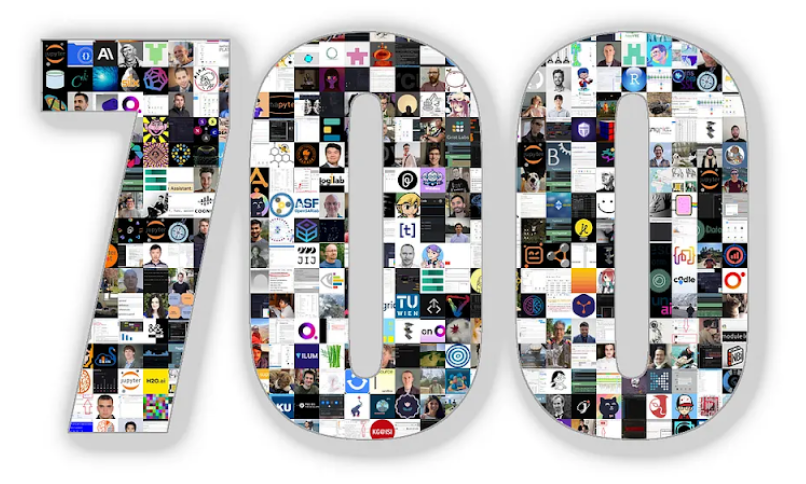
- J upyterLab now supports more than 700 extensions, highlighting how the community continues to expand notebook workflows across visualization, AI tooling and developer productivity.
The growing extension ecosystem demonstrates the flexibility of Jupyter’s modular architecture and the range of tools being built by contributors across the community. Read more>>
- The Jupyter Book team released mystmd 1.8.2 with three key updates: a new {anywidget} directive for embedding interactive JavaScript widgets in MyST pages, an improved {toc} directive that can display only a section's child pages, and better link handling for multi-site projects. Read the blog >>
- The Linux Foundation and the Berkeley Institute for Data Science (BIDS) hosted a Security Tooling Sprint on March 31, bringing together Jupyter maintainers, security experts, and contributors to tackle a growing challenge: as AI accelerates contributions and security reports, open source projects need better tooling for dependency analysis, vulnerability scanning, and supply chain security. Participants worked hands-on to evaluate the current security tooling landscape and apply it to real Jupyter project workflows, with the goal of producing actionable recommendations back as issues and pull requests. Learn more >> and stay tuned for a recap.
- On March 18-19, members of the Jupyter community came together for Jupyter AI workshop: Building Extensible AI Capabilities for Interactive Computing - Through hands-on demos, collaborative discussions, and focused sprint sessions, the collaborators shared building blocks, standardized APIs, and protocols for seamless AI integration, fostering a human-centered interactive computing experience.
LF AI & Data
- Join the LF AI & Data Mini Summit, co-located with Open Source Summit North America, for a half-day of technical talks and discussions on real-world AI use cases, open collaboration, and project updates. Taking place on May 21 (9:00 AM–12:30 PM) at the Minneapolis Convention Center, attendees can connect with the community and explore the latest in open source AI and data. Save the date, and we hope to see you there!
- Catch a session on the Docling project at Uphill Conference, happening May 7-8 in Bern, where Panos Vagenas of IBM Research will present “Docling: Insights & Lessons from Building an Open-Source AI Standard for Unstructured Data.”
- A new LF AI & Data blog, a companion to last year’s part 1 post, explores how TrustyAI helps operationalize the Responsible Generative AI Framework (RGAF), turning principles like fairness, transparency, and privacy into measurable, enforceable components within AI systems. The post highlights how open source tooling can embed responsible AI directly into development workflows, enabling real-time monitoring, guardrails, and audit-ready compliance.
- Miss the Docling project’s session, “Build AI Ready Search:Integrating Docling with OpenSearch for Advanced RAG and Agentic Applications” at OpenSearchCon? Catch the recording >>
- LF AI & Data’s Docling project made some industry event appearances, spreading the word on the value of the open source document processing framework, including:
- NVIDIA GTC (March ) Docling demos in the IBM booth
- All Things Open (March 23-24)
- PyTorch Con (April 7-8): Docling co-hosted an Open Source Soireewith Human Signal
- Session at the recent ETSI AI Native summit, Michele Dolfi, PhD from Docling shared a trend where LLMs are generating fake scientific terms, such as "vegetative electron microscopy”, because of incorrect PDF parsing, leading to the propagation of these inaccuracies in new research papers.
- At the DataTune | Data and AI Conference (March 6-7), community members Cedric Clyburn & Legare Kerrison presented on how creating Structured Data Tools like Docling can turn complicated and messy documents such as PDFs, reports, and slides into structured data that systems can actually use. When the inputs are clean and organized, the results get dramatically better.
- At theSCALE(March 5) event, community members from IBM, Mingxuan Zhao and Roy Derks presented “Learn to unlock Document Intelligence with Open Source AI.”
LF Decentralized Trust
- Swift's blockchain-based shared ledger progresses to MVP implementation | Swift has completed design and is now building its interbank shared ledger on Besu, with live transactions planned for 2026. Banks retain control of keys and settlement; Swift handles orchestration. If you are tracking where permissioned DLT is landing in production payments infrastructure, this is the clearest signal yet.
- Lise to host tokenized IPO for French defense supplier ST Group | France's Lightning Stock Exchange is listing aerospace SME ST Group as the first IPO on a natively tokenized exchange, with shares issued and settled directly on Besu under the EU DLT Pilot Regime. For anyone building regulated digital asset infrastructure, this is the first live test of the full issuance-to-settlement lifecycle running onchain under institutional compliance conditions.
- The growth of institutional blockchain adoption | Institutional crypto AUM grew more than 300% between 2020 and 2024, rising from $36 billion to over $150 billion, with the broader blockchain market projected to reach $1.4 trillion by 2030. The data points are useful context for enterprise architects and business development teams making the case internally for decentralized trust infrastructure investment.
- Bhutan's NDI wallet now handles passport applications | Bhutan has connected its National Digital Identity wallet, built with the Trust over IP Foundation, to the national passport application system. Citizens scan a QR code and verified credentials populate the form automatically, replacing manual document submission at scale. A working government deployment of verifiable credentials worth studying for anyone designing real-world identity infrastructure.
- Meet the 2026 Technical Advisory Council | Arun S M takes the chair role for 2026, with priorities spanning specification project governance, cross-project collaboration, and setting standards for GenAI-assisted contributions. TAC members including Hendrik Ebbers also lay out where they see the biggest technical opportunities this year, from post-quantum cryptography to decentralized credentials moving into production. If you want to understand what technical direction LFDT is headed and where to plug in as a contributor, start here.
- A look into Hiero's accomplishments and goals | The Hiero community reviews what 2025 delivered, governance structures, contributor growth, and operational foundations, and maps out 2026 priorities including OpenSSF score improvements, cross-project collaboration within LFDT, and making production adoption more visible through documented use cases. Useful reading for contributors evaluating where to plug in and for enterprise teams tracking the project's production readiness trajectory.
- The Hyperledger Fabric-X roadmap and the era of ultra-scalability | Fabric-X V1.0 ships April 17, with an ordering protocol benchmarked at over 100,000 TPS on commodity hardware, Kubernetes deployment support, and a 2026 roadmap that adds EVM compatibility in Q2 and a V1.3 LTS release in Q4. Architects evaluating permissioned DLT for regulated digital asset workloads will want to track the quarterly delivery cadence against their own procurement timelines.
- Clarity, credibility, and collaboration: new Outreach Committee leaders share their vision | Ashley O'Brien and Marcello Gracietti lay out their priorities for the Outreach Committee: layered messaging for developer, institutional, and business audiences, scaled member storytelling programs, and stronger visibility for regional adoption stories from Brazil, India, and beyond. Members looking to activate co-marketing or contribute case studies will find the practical entry points here.
LF Edge
- AI infrastructure is hitting an inflection point, and a new LF Edge blog breaks down how InfiniEdge AI brings distributed AI across the edge-to-cloud continuum through an “orchestra of orchestrators” approach. Highlighting projects like EdgeX Foundry, EdgeLake, and FIDO Device Onboard (FDO), the blog shows how open, interoperable frameworks enable scalable, policy-driven AI deployment while improving efficiency, resilience, and data governance. Read the blog >>
- We’re entering the era of Physical AI, where systems can sense, decide, and act in the real world. Akraino R9 is designed to support this shift, combining edge performance, cloud native architecture, and telecom-grade reliability to enable real-world intelligent infrastructure and autonomous systems. Learn more and get involved >>
- The State of the Edge 2026 report is now available, bringing together expert perspectives on how edge computing is evolving in the age of AI. Covering architecture, real-world deployments, cybersecurity, and large-scale operations across industries, the report offers practical insights and forward-looking guidance for building and scaling edge solutions. Download the report >>
LF Energy
- Call for Proposals Open for LF Energy Summit Europe 2026 | The call for proposals is open through May 25 for LF Energy Summit Europe, taking place September 15–16 in Berlin. The community seeks sessions covering project developments and practical implementations of open source software within utility environments and modern energy systems.
- The History of LF Energy and Neutral Governance | A new retrospective details the origins of LF Energy, from its 2018 founding to its current role as a host for shared digital infrastructure. The narrative explores how neutral governance enables projects like OpenSTEF and SEAPATH to provide the common plumbing for the power grid through multi-continent collaboration among utilities and technologists.
- EVerest Project Transitions to Long-Term Support (LTS) Strategy | The EVerest 2026.02.0 stable release marks a shift to a six-month cadence with formal public API stability guarantees. Hosted by LF Energy, the EVerest community's latest milestone includes hardware drivers and security patches for OCPP and ISO 15118, providing a production-grade foundation for EV charging infrastructure.
- Battery Data Alliance and Microsoft Release Standardized Dataset | The LF Energy Battery Data Alliance (BDA) released a standardized battery dataset contributed by Microsoft’s Surface Battery Development team. The data aligns with the Battery Data Format (BDF) to provide a common structure for cell architecture and cycle aging research, supporting interoperability in energy storage.
- OperatorFabric 4.11.0 Enhances Monitoring and Admin Control | The release of OperatorFabric 4.11.0, a project hosted by LF Energy, introduces pixel-based monitoring enhancements and new email management features for TSOs and DSOs. The update also includes security upgrades via OpenAPI V3 and Angular OIDC to support modular event management and shared visibility across distributed energy systems.
- Future Energy Lab on Bridging Pilots and Open Source | Anika Lange of the German Energy Agency (dena) shared insights from the LF Energy Summit Europe 2025 regarding the transition from public sector pilots to sustainable open source ecosystems. The discussion focused on utilizing open source to mitigate vendor lock-in and foster digitalization in the energy sector.
- Digital Sovereignty for Grid Resilience | Christophe Villemer of Savoir-faire Linux detailed the requirement for digital sovereignty in power grid resilience at the LF Energy Summit Europe 2025. The presentation highlighted how LF Energy projects, including SEAPATH, allow grid operators to maintain control over digital supply chains through utility-grade software and neutral governance.
- Alliander Progresses Toward Software-Defined Substations | Sander Jansen of Alliander N.V. discussed the transition to software-defined substations at the LF Energy Summit Europe 2025. The DSO is evaluating projects such as SEAPATH and CoS while contributing to LF Energy CoMPAS to decouple hardware from software and implement IEC 61850 standards for substation automation.
LF Networking
- Nephio Release 6 (R6) is now available, bringing platform enhancements, security updates, and new O-RAN O2 IMS integration to advance cloud native network automation. The release strengthens Nephio’s core principles of intent-driven automation and configuration-as-data while improving performance and documentation. Read the [release announcement blog >>](https:/...